When debating which noir theme and which scene from The Asphalt Jungle I would analyze, a standout emerged for each. In terms of theme, the theme of corruption and the city seemed central to the story of the asphalt jungle and particularly to Dix’s character. For a scene, the ending scene in which Dix makes it back to his family’s old horse farm with Doll only to drop dead had me hooked. Though this scene doesn’t take place in the city necessarily, I think it works well to display a lot of what Christopher talks about in the chapter “Into the Labyrinth.”
The three main levels of labyrinth Christopher uses to discuss the theme of city and corruption are: the physical labyrinth of the city, the labyrinth as the human condition and machinations, and the labyrinth of the hero’s inner workings. All three are represented in this final ending scene, though I argue that the first and third have a bit of a stronger case.
Let’s begin with the first–The physical labyrinth of the city. Christopher names this plainly as “the actual physical maze of the city: streets, sidewalks, bridges, automobile and subway tunnels, underpasses, docks and piers…it is packed with millions of unique warrens: office buildings, apartment houses, department stores, and tenements…” (17). Obviously we see the maze of the city represented in the film as characters zigzag and slink between locations. I found the city in the asphalt jungle to be defined not only by its shadowy nooks and crannies, but also by its duality and class difference. The most obvious signal of this is the heist scene where the progression of the characters clues the audience into the dual nature of the presented city.
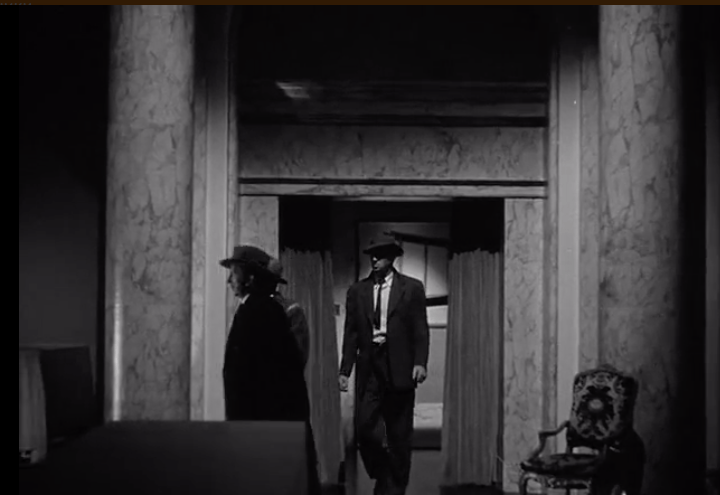
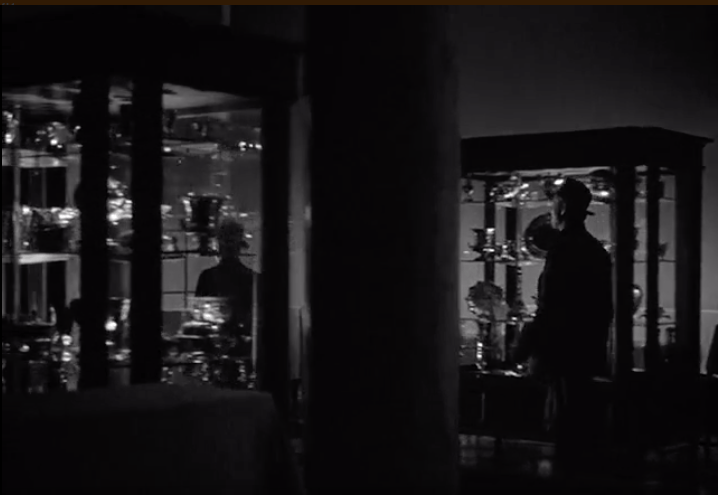
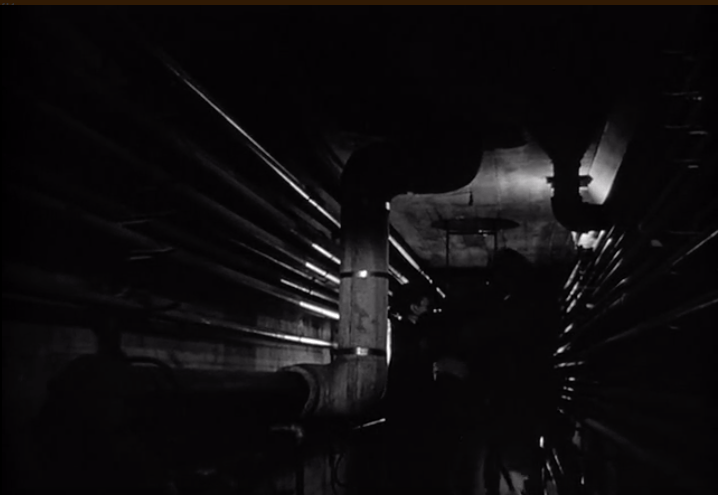
The men enter the bank through the door into an austere and luxurious entrance with marble columns and valuables in glass shelves. They leave by scurrying like rats through a hole in the wall into what looks like a maintenance tunnel. Eventually they pop out of a manhole, making it seem like they’ve come from some sort of grimy sewer. This shows the duality that the city life thrusts upon the character merely in terms of physicality as beautiful backdrops are juxtaposed by harsher, dirtier ones and scenes of wealth are juxtaposed by images of poverty. This same duality, however, doesn’t seem to be represented in the last scene when we as the audience lay our eyes on a rural setting for the first time thus far.
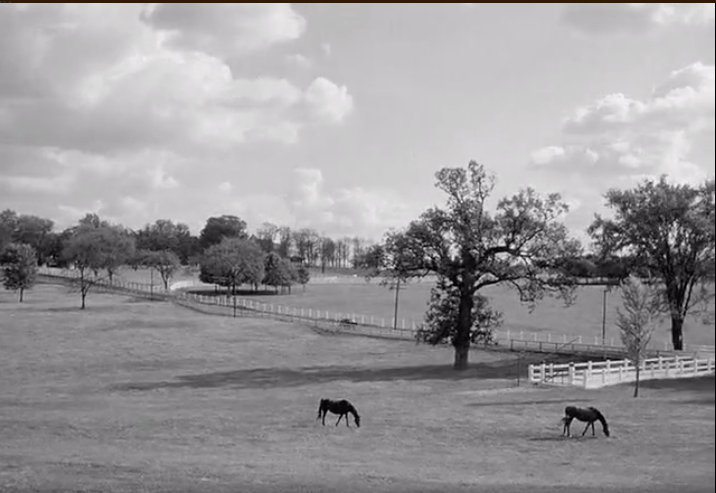
The long shots like the one above display wide open spaces lined with trees. It seems like in this scene, the film is implying a homogeny to the rural setting, as it never changes from this pastoral ideal of wide fields and fences the whole time we see it. This contrasts the two-faced city which is implicitly portrayed as confusing and false in comparison. Additionally, in terms of color the shots in this ending scene are much more washed out than anything we see in the city throughout the film. This can be seen in the picture above, where the dark colored horses stand out from their bright colored field. They are shadows in a world of light, and not flickering lights in a world of shadow.
The second and third tie into the idea of the corrupt city but have more to do with Dix’s character. Christopher defines the second layer of the labyrinth as “the human condition in which the characters intersect and interact in the city” (17). I take this to mean that the second layer is where the characters desires, goals, and actions cross one another and create alliances and conflicts. The characters here are outside the city and the labyrinth, but its effects on their relationship are still distinctly seen.
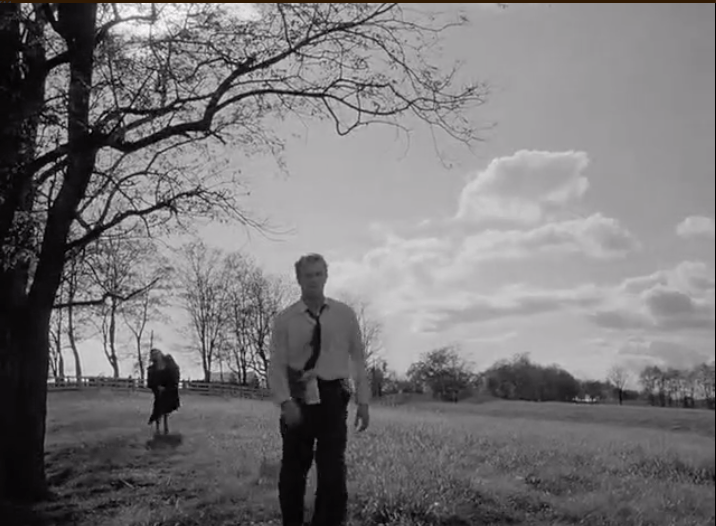
This portion of the scene features Dix limping forward towards the farm while Doll attempts to chase after him. They’re acting out old patterns seen in the film: Doll pursues Dix and Dix flees from Doll. The whole film there’s been a ghostly semblance of a “will they, won’t they” feeling about their relationship, but this seen shows that no, they won’t. Despite having escaped from the city and therefore the labyrinth, the second layer of the labyrinth remains present in terms of their relationship. The city has corrupted whatever could have been between them in its corruption of Dix.
Dix’s journey is finalized here as the exit to the labyrinth and the labyrinth’s third layer shows how trapped Dix’s character really is. Christopher explains the third layer of the labyrinth as “the labyrinth of the hero’s inner workings–mental and physiological–subjected to brutal stresses that mercilessly reveal his flaws” (17). Dix is subjected to brutal stresses that leave him scarred and flawed by the ending scene of the film. This scarring is most obviously seen in how he talks to Doll while in the car.
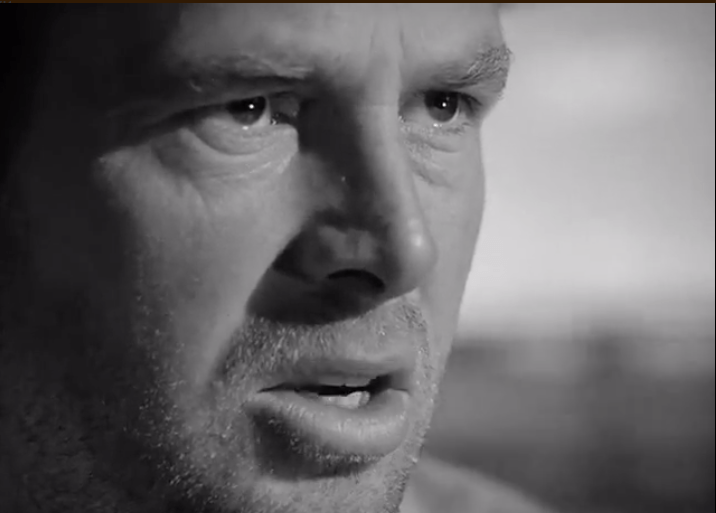
The camera zooms close in his face as he seems to be almost acting out what he said the day he lost everything a bet. He murmurs to Doll, “I said it and I’ll say it again. If pa’ just hangs onto that black colt, everything’s gonna be okay” (1:50:11-23). The stressors from the city that battered Dix have turned his passionate goal into a delusion. Dix himself has been corrupted by the city in terms of his character. Unable to break free of the city’s grip, he dies in the very field he worked so hard to buy back.
I don’t think we’re necessarily meant to demonize Dix. Christopher very clearly states that he sees the noir hero “for what he really is: a victim” (32). Noir heroes are victims of cruel and disorienting cities that fester with corrupting elements waiting to infect the undiscerning gumshoe or femme fatale. And while the police commissioner refers to the city’s criminals as “predatory beasts” (1:48:22), the film gives another animal to clearly identify Dix with. A horse. Not a predator. Just one of the herd.

 Sam's Blog